Le Infezioni in Medicina, n. 1, 144-150, 2025
doi: 10.53854/liim-3301-15
INFECTIONS IN THE HISTORY OF MEDICINE
Not to lose control of war: narrative review of military louse control in the first half of XX Century
Omar Simonetti1, Mariano Martini2, Emanuele Armocida3
1 Infectious Diseases Unit, University Hospital of Trieste, Trieste, Italy;
2 Department of Health Sciences, University of Genoa, Genoa, Italy;
3 Department of Medicine and Surgery, University of Parma, Parma, Italy.
Article received 22 October 2023 and accepted 1 February 2025
Corresponding author
Emanuele Armocida
E-mail: emanuele.armocida@unipr.it
SummaRY
Introduction: Insects and the diseases that they are capable to host have played a crucial role in the outcome of major military operations throughout recorded history. As a matter of fact, regular armies had to fight both against enemy uniform and invisible pathogens; the latter often causing battle casualties more disabling than bullets.
Methods: All the sources present on Pubmed and Google Scholar relating to the fight against Bartonella quintana and Rickettsia prowazeki in the military field during the first and second world wars were studied, with particular attention to the articles published during the wars. The sources were then processed in a historical-medical perspective.
Results: First World War (WWI) was a position war also if considering the fight between humans against louse; with the latter being controlled by rudimentary but science-driven hygienic measures. Contrary, during Second World War (WWII) human forces, thanks to new research and development attainments, have gone on the counter-offensive by “shooting flights with cannons”.
Conclusions: The fascinating history of Bartonella quintana and Rickettsia prowazekii tells us that the war against armies could mirror the war against infectious diseases and their arthropod vectors.
Keywords: louse, trench fever, military medicine, prevention.
ENEMIES AS INSECTS, INSECTS AS ENEMIES
Insects, and their resulting vector-borne diseases, have played a pivotal role in the outcome of many important military operations throughout history. As a matter of fact, regular armies had to fight both against enemy uniform and invisible pathogens; the latter often causing battle casualties more disabling than bullets [1, 2]. As cited by Zinsser many battles of early modern warfare “are only the terminal operations engaged in by those remnants of the armies which have survived the camp epidemics” [3]. On the basis of this assumption, it is important to note that “exterminate” is a verb that is used as frequently in military terminology as it is in pest control. Indeed, its Latin origin refers to rejection beyond borders and is frequently used in both warfare and entomological contexts. Interestingly, insects represent one of the lowest phyla of the animal kingdom. They were frequently cited, especially in the context of the Second World War (WWII), when people murdered in genocides were classified as human ‘pests’ [4].
The inner connection between insects and enemies is not limited to metaphors of vocabulary. In the first decades of the XX century, entomologists and military researchers realised that some chemicals that are toxic to insects are also harmful to humans and vice versa. Thus, efforts to combat natural and human enemies developed hand in hand. For example, the production of some explosives during the First World War (WWI) produced a by-product called paradichlorobenzene (PDB), which entomologists then developed into an insecticide [5]. Conversely, In WWII insecticides used for room fumigation were experimented by Nazi troops in civilian settings and in lager camps. It is the case of hydrocyanic acid (Zyklon B), sadly famous for its indiscriminate usage in Lager Camps [4, 5].
“TAKING A HAMMER TO CRACK A NUT”
WWI and, in some scenarios, WWII have been characterized by overcrowded trench warfare as depicted in Figure 1.
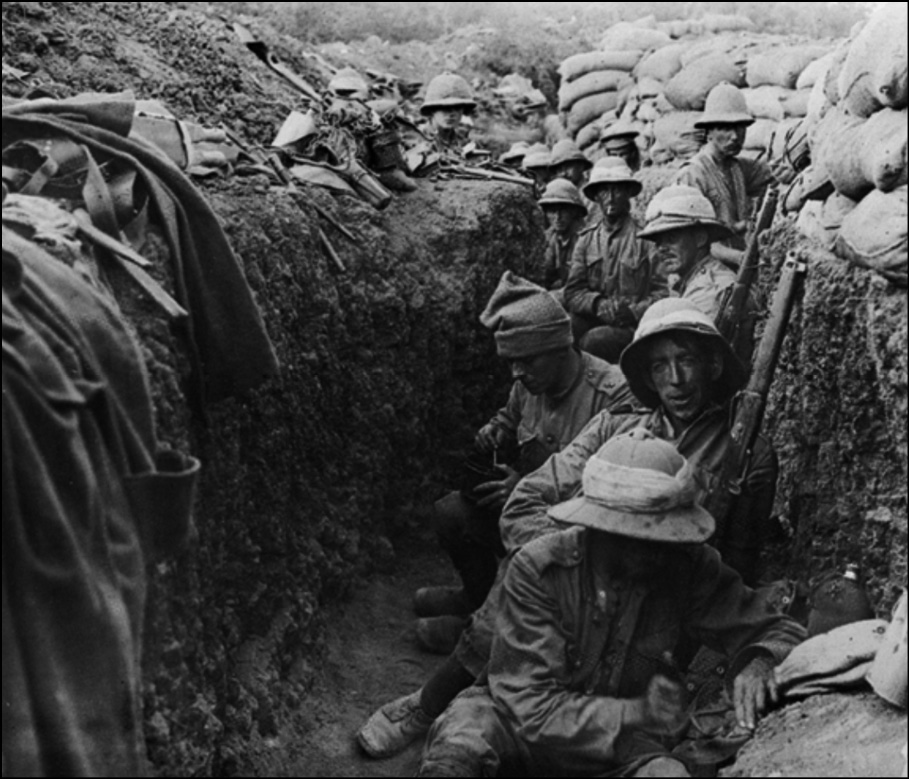
Figure 1 - Example of an overcrowded trench on the southern section of Gallipoli Peninsula during World War I. The men belong to the Royal Irish Fusiliers. https://commons.wikimedia.org/wiki/File:Soldiers_in_trench.jpg

Trenches are deep holes dug by soldiers and used as a place from which they can attack the enemy while being hidden. The war historian, Sir Hew Strachan claimed “Trenches saved lives […] They protected flesh and blood from the worst effects of the firepower revolution of the late 19th century”. However, their unhealthy and overcrowded conditions had serious implications for military efficiency, with infection conditions playing a crucial role in human well-being [6] . In fact, trench fever caused by lice was the cause of one fifth of admissions to casualty clearing stations by 1917 [6]. Once again, a single insect was able to affect one of the most important events of the XX century.
In Italian informal speech “sparare ad una mosca con un cannone” is a common way to indicate an exaggerated response to a problem. Literally means “to shoot a fly with a cannon” and it could represent the English translation of “taking a hammer to crack a nut”. In this paper we would like to give some real feedback on the cited slang; reviewing the way the military corps have addressed their efforts against louse and the most famous disease they spread, called trench fever.
THE LOUSE PROBLEM IN WWI AND EARLY RESEARCH ON TRENCH FEVER
In 1915, Major John Graham, a British medical officer on the Western Front of WWI, reported the first case of a new febrile illness with puzzling symptoms and difficult classification [7]. Soon the same symptoms spread to the front-line troops scattered throughout the 4000-mile network of trenches in France. For this reason, the new disease was called trench fever; it entered first into military parlance and later into scientific literature. The typical course of the disease was characterized by 2-4 days of fever, which recurred at 5-day intervals and a recovery only after several weeks [7, 8]. As there was enough early suspicion of an infective origin spread by an insect vector, in 1915 an entomologist, Alexander David Peacock (1886-1976), was assigned by the British army to investigate the transmission of the new disease [9]. As the disease occurred mainly in winter, mosquitoes and flies were not considered important vectors. In fact, Peacock did a 6-month study on the body louse examining 274 soldiers and concluded that 95% of them were infested (the average number of lice per man was 20 and about 5% of soldiers were infested with more than 130 lice). Louse, in warm surroundings migrate from one host to another in close proximity, e.g. in beds where two people sleep together or in person-to-person contact [10]. Hence, lice were capable of massive transmission of diseases in trench overcrowded dorms. It is estimated that by the end of the war more than 1 million troops were infected in such unhealthy circumstances [8]. Nevertheless, for 3 long years the transmission modality and the causative agent of trench fever were unknown and strongly debated. A turning point was the establishment of the British War Office’s Trench Fever Investigation Commission (TFIC) in 1916, chaired by David Bruce (1855-1931), the discoverer of the cause of brucellosis. At the same time, the American Red Cross founded the Medical Research Committee (MRC), which was also concerned with research into trench fever. Through the joint efforts of the British and Americans, it was possible in 1918 to prove that the disease was transmitted by lice, which was not an easy task [11, 12].
A NON-HUMAN ENEMY UNVEILED IN WWI WARFARE SCENARIO
As shown above, the human body louse Pediculus humanus corporis (Figure 2) was recognized as the spreader of trench fever and it became another enemy in the warfare scenario [7]. Human body louse is an obligate bloodsucking ectoparasite of human and shares with head louse, Pediculus humanus capitis, the almost totality of genomic content except for one gene expression [13]. It has co-evolved with its primate host over thousands of years and has become the main vector of three bacteria pathogenic to humans: Rickettsia prowazekii, Borrelia recurrentis and Bartonella quintana. Only in 1920 Rickettsia quintana, further reclassified as Bartonella quintana, was consistently found in the gut and feces of lice and its causative role in trench fever was accepted [7, 13]. Body lice become infected by blood meals from an infected patient, who is abandoned when fevered (the febrile state of the primary host almost doubles the migration). Transmission to uninfected persons occurs through the feces or crushed bodies of infected lice which contaminates bite sites, conjunctiva, mucous membranes or microlesions of the skin [10, 14].
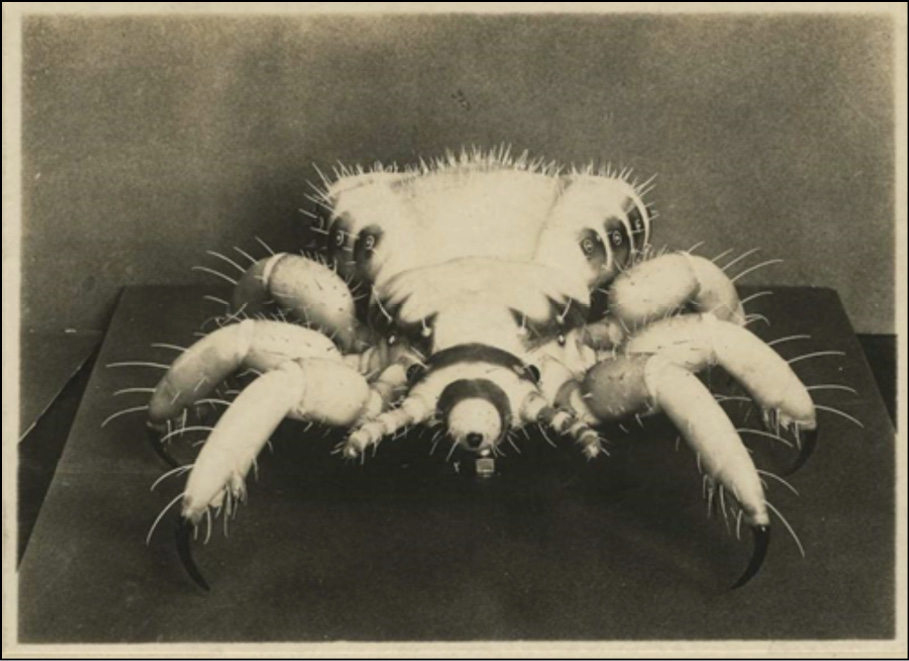
Figure 2 - Human body louse model (Pediculus humanus corporis), vector of Trench fever. Typical size is 2 to 4 mm. Otis Historical Archives of “National Museum of Health & Medicine”. https://commons.wikimedia.org/wiki/File:3509017202_1c9ee5c3bb_oPediculus.jpg

POOR WEAPONS DISPLACED AGAINST THE DISEASE IN WWI
It is of interest to analyze what weapons were used by the armies on the Western Front during the WWI to contain this debilitating disease and its spread. We would like to recall that back then there was no pesticide or infection control technique that was 100% effective in eliminating the vector of trench fever; therefore, the disease continued to spread until the end of the war. In fact, the usual methods used in the camp laundries to kill lice and their eggs were not effective because the water used was too low a temperature and soapy water does not harm the parasites in absence of prolonged immersion [10]. At that time, NCI (naphthalene 96%, creosote 2% and iodoform 2%) was the most effective product against adult lice (not being ovicidal). Nevertheless, the military was unable to procure NCI in sufficient quantities because it was derived from coal tar, most of which was used in the manufacture of explosives [7, 9].
In the absence of sufficient pesticides, soldiers often resorted to self-delousing by manually picking lice and eggs off their clothing. In addition, the inspection was strongly quoted by Nuttall. Dr Hamer of the London County Council, who decided that beds had to be examined weekly in common lodging-houses. Throughout one year, lice were found in 12 to 31 % of the beds [10]. Furthermore, the British army published a list of recommendations designed to minimize louse infestation, known as Department of Government Circular Memorandum No. 16. Theoretically, men were stripped and their clothes examined at least weekly, and the man bathed at least once every 2 weeks [15].
The main garments disinfection technique relied on Tresh Disinfector, developed by Thresh Disinfector Company of 66 Victoria Street, Westminster, London, which was a device using low pressure steam together with hot air (Figure 3) [16]. Tresh Disinfectors were sometimes mounted on wheels and horse-drawn, as shown in Fig 3. Nevertheless, this potential large-scale method of disinfestation was limited by the restricted number of available machines. The ‘Russian Pit’ was another hot-air delouser, with a much larger capacity; it therefore did not reach the Western Front until 1918 [17].
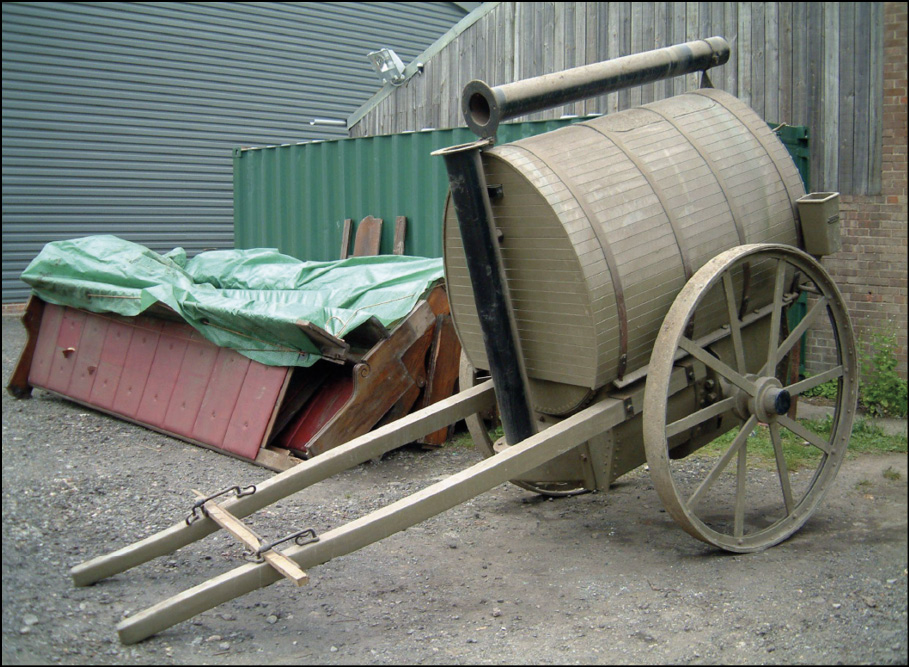
Figure 3 - Rare image of a WWI Thresh Disinfector. Beamish The Living Museum of the North.
NOT ONLY TRENCH FEVER DURING WWI
While The Western Front was afflicted by Bartonella quintana; the Eastern Front was hardly stricken by another infectious disease transmitted by lice, Epidemic Typhus; which has been known for centuries. Epidemic Typhus was a constant threat to troops because its causative agent, a rickettsia, was present in all populations, often in a latent or asymptomatic phase called Brill-Zinsser disease [18]. Infection is sustained by R. prowazekii and is transmitted similarly to trench fever; however, transmission is conveyed also by inhalation of aerosolised dried faeces and symptoms are more severe [19]. The outbreak of WWI started in Serbian army in 1914 and moved to Central and Eastern Europe. It is estimated that between 1917 and 1925, 25 million people in Russia contracted this form of typhus, of whom 3 million died of the disease. It is noteworthy that one third of the Red Army doctors contracted the infection and 20% of them died, even though the body louse was known to carry the disease [19]. As a matter of fact, in 1909 Stanislaus von Prowazek (1875-1015) had discovered the role of lice in transmission of this form of typhus and in 1914 he confirmed the observations of Howard Taylor Ricketts (1871-1910) about a Rickettsial origin of the disease [18]. During the Russian Revolution, overcrowding, chaos, the collapse of medical and public health services, and a critical shortage of soap and fuel contributed to an ongoing epidemic. A British officer described the situation in Rostov around Christmas 1919. “There was no fuel to thaw water or heat it for a bath, or to wash clothes in; waterpipes had frozen and burst; [...] you could not move a step without running the risk of infection. The railway stations and the trains were the worst typhus traps” [20]. Even though it had been known for centuries, as with trench fever, there were no reliable treatments and no 100% effective control measures. In fact, the basic strategies for controlling lice were laid out by Dr K. F. Flerov in early 1919. These methods included isolating patients, disinfecting their clothes and rooms, setting up lice-free hospitals, shaving men and kerosene or benzene pre-treatment. Fumigation with sulphur or benzene was also an acceptable disinfection method [20].
Public health and military authorities of Russia tried to focus their resources on railway passenger control and on 6 December 1919 a week of railway stations cleanse was proclaimed. In the same year, disinfection teams were treating 40-50,000 passengers daily in Moscow train stations and about 300 disinfection stations were erected alongside the railways and waterways. The louse control was such an important issue that Lenin remarked “All attention to this problem, comrades. Either lice will conquer socialism, or socialism will conquer lice.” He knew that only winning the horizontal war against the louse it would be possible to win the vertical one against the human enemies [2, 20].
HYGIENE, THE FIRST BULLET AGAINST THE DISEASE
In summary, R. prowazekii and Bartonella quintana are the causative agents of trench fever and epidemic typhus, two wartime diseases that occur in the cold months when warm clothing and inadequate hygienic conditions favour the multiplication of lice [21]. In WWI, military commanders realised that their soldiers would lose on the battlefield if lice won in the trenches. Therefore, headquarters tried to protect their own troops from insect-borne diseases, mainly by recommending hygiene and mechanical removal of lice. The Hygiene response was clearly obtained after WWI, with first vaccines development. As a matter of fact in 1930 Rudolph Weigl (1883-1957) in Poland discovered a vaccine against epidemic typhus by smashing the intestines of lice infected with R. prowazekii [22]. Interestingly, an attenuated live R. prowazekii vaccine against epidemic typhus is now also available, although being infrequently used [21].
CHANGING PARADIGM, FROM PREVENTION TO LOUSE EXTERMINATION
During WW II, 901 cases of trench fever were recorded among the American expeditionary forces in Europe. The number of cases of epidemic typhus, on the other hand, was only 47. Furthermore, in the years 1942-1945, there were only 30 cases of typhus; without typhus deaths among members of the US army in the North Africa-Middle East-Mediterranean zone [23]. Colonel Long, Chief Consultant in Medicine, made some interesting observations when he visited the overrun German military hospitals in Merano and Cortina D’Ampezzo, Italy, in 1945. He conferred with German medical officers as follows: “Trench fever (Volhynia fever). There were hundreds of cases of this louseborne disease among [German] troops in the Mediterranean area in the winters of 1943-44, 1944-45. It reached epidemic proportions in German troops in Russia” [24]. Nevertheless, the extension of rickettsial diseases was not as prevalent in the Second World War as it was in the First. The reason for this is unclear, and various ambiguities remain about the true nature of the disease definition in available documents.
Control of Lice in WWII still included delousing of individual soldiers and disinfestation of clothing, equipment, and vehicles. Nevertheless, one of the first research goals of the US Medical Department was an effective lousicide. In 1942, the Bureau of Entomology developed a product called the MYL formula, which was an effective killing agent. Since then, a portable field chamber for disinfecting clothing and bedding using methyl bromide vials replaced the earlier devices [25].
Army research played an important role in the development of an effective delousing chemical. In 1940, the United States realised that the country could perish in the ongoing global conflict, and as war scenarios played out overseas and in the Pacific, the prevention and control of diseases caused by arthropods became an urgent task on the military agenda [26]. Thus, experts were rapidly enrolled in the army and by 1943 there were 723 entomologists in the military corps. Specially trained personnel were recruited to combat not only typhus but also malaria, tsutsugamushi fever and the plague of bed bugs in the barracks. In the meantime, the US Secretary of War established the United States of America Typhus Commission. The commission’s studies, research and recommendations led to the development of diagnostic tests, improved treatment methods and the production of an effective vaccine [27, 28].
The control of lice was a priority task for US research and development investments during the war years, as severe typhus epidemics had occurred in various war zones, including Egypt and French North Africa [2]. Enforced personal hygiene and effective coordination between medical personnel and troop commanders were probably a significant factor in the success of vector control. While WWI was a war of physical disinfestation, World War II saw the introduction of efficient chemical disinfestation that forever changed the role of lice in wars and humanitarian crises. In fact, biomedical research led by the Orlando Laboratory of the Bureau of Entomology and the Food and Drug Administration reached the discovery that made the history of fighting arthropod-caused infections: dichlorodiphenyltrichloroethane (DDT) [29].
When DDT was turned over to the United States Government in the fall of 1942, it was immediately tested against the louse. The 10% dust was found to be a potent killing and disinfecting agent and all available DDT was used in typhus-infested areas. Interestingly, it was demonstrated that dusting the individual fully clothed was an effective control measure. In this way, many infested civilians, refugees and prisoners of war could be treated. Thanks to DDT, lice infestation among American troops was reduced to a minimum and the danger of disease never occurred [25].
The passive entomological warfare was vital to US troops during the invasion of Italy. When typhus threatened to decimate the American soldiers after they landed in Naples, a massive lice control programme was launched started and more than 3 million people were dusted with 127 tonnes of DDT [30]. It’s large-scale production together with the discovery of methyl bromide fumigation (100% efficacy in killing lice and their eggs) were undoubtedly responsible for the remarkably low incidence of typhus in Army personnel [1]. The war against lice was already and definitively won in 1945; as stated by F.C. Bishopp, Assistant Chief of the Bureau of Entomology and Plant Quarantine: “It is safe to say that with our present defensive weapons against epidemic typhus in hand, our own military forces are not likely to suffer seriously in any event [...]” [1].
CONCLUSIONS
From this brief consideration, it is clear that the louse and every form of typhus transmitted by it played a decisive role in the war casualties recorded in the First and Second World Wars. All continents and points of the compass were affected by the two diseases considered, which were prioritized in the military agenda for up to half a century [1]. The fascinating story of Bartonella quintana and Rickettsia prowazekii shows us that the war against armies could be a mirror image of the war against infectious diseases and their arthropod vectors. We believe that the First World War was also a war of position, considering the battle between humans and lice, the latter being combated by rudimentary but scientifically based hygienic measures. Contrary, during the Second World War human forces, thanks to new research and development attainments, have gone on the counter-offensive by “shooting flights with cannons”.
Conflict of interests
Authors declare no conflict of interest.
Funding
This research did not receive any specific grant from funding agencies in the public, commercial, or not for profit sectors.
Authors contributions
E. Armocida developed the idea; O. Simonetti retrieved consistent data and wrote the work; M. Martini validated and supervised the article.
REFERENCES
- Bishopp FC. Insect Problems in World War II with Special References to the Insecticide DDT. Am J Public Health Nations Health 1945; 5(4): 373-378. doi: 10.2105/ajph.35.4.373.
- Simonetti O, Armocida E. El Alamein: the battle in the battle. How infectious disease management changed the fate of one of the most important battle of the World War II. Infez Med. 2020; 28(3): 441-449. PMID: 32920582.
- Lockwood JA. Insects as weapons of war, terror, and torture. Annu Rev Entomol. 2012; 57: 2052-2027. doi: 10.1146/annurev-ento-120710-100618.
- Jansen S. Chemical-warfare techniques for insect control: insect ‘pests’ in Germany before and after World War I. Endeavour. 2000; 24(1): 28-33. doi: 10.1016/s0160-9327(99)01261-2.
- Russell EP. “Speaking of Annihilation”: Mobilizing for War Against Human and Insect Enemies, 1914-1945. J Amer Hist. 1996; 82 (4): 1505-1529.
- Pennington H. The impact of infectious disease in war time: a look back at WW1. Future Microbiol. 2019; 14: 165-168. doi: 10.2217/fmb-2018-0323.
- Anstead GM. The centenary of the discovery of trench fever, an emerging infectious disease of World War 1. Lancet Infect Dis. 2016; 16(8): e164-e172. doi: 10.1016/S1473-3099(16)30003-2.
- Ruiz J. Bartonella quintana, past, present, and future of the scourge of World War I. APMIS. 2018; 126(11): 831-837. doi: 10.1111/apm.12895. PMID: 30357961.
- Peacock A, Pearson W. The Peacock versus the louse (pediculus humanus corporis): one soldier’s contribution to combating trench fever in the First World War. J R Coll Physicians Edinb. 2010; 40(3): 256-262. doi: 10.4997/jrcpe.2010.315.
- Byam W, Lloyd L. Trench Fever: Its Epidemiology and Endemiology. Proc R Soc Med. 1920; 13(Sect Epidemiol State Med): 1-27. PMID: 19981284.
- Bruce D. Trench Fever. Final Report of the War Office Trench Fever Investigation Committee. J Hygiene.. 1921; 20(3): 258-288. doi:10.1017/S0022172400034008
- Strong RP, Swift HF, Opie EL, et al. Report on progress of trench fever investigations: Trench Fever Commission Of Medical Research Committee, American Red Cross. JAMA. 1918; 70(22): 1597-1599. doi:10.1001/jama.1918.26010220003006°
- Bonilla DL, Durden LA, Eremeeva ME, et al. The biology and taxonomy of head and body lice--implications for louse-borne disease prevention. PLoS Pathog. 2013; 9(11): e1003724. doi:10.1371/journal.ppat.1003724.
- Amanzougaghene N, Fenollar F, Raoult D, et al. Where Are We With Human Lice? A Review of the Current State of Knowledge. Front Cell Infect Microbiol. 2020; 9: 474. doi:10.3389/fcimb.2019.00474.
- MacPherson WG. Prevention of Infestation by Lice. In MacPherson WG, Horrocks WH, Beveridge WWO eds. Official History of the War - Medical Services: Hygiene of the War, Vol. 2. London: HMSO. 1923: 327-388.
- https://www.grandadswar.org/things/thresh-disinfector/ (accessed 24 June 2023).
- Atenstaedt RL. Trench fever: the British medical response in the Great War. J R Soc Med. 2006; 99(11): 564-568. doi: 10.1258/jrsm.99.11.564.
- Woodward TE. The public’s debt to military medicine. Mil Med. 1981; 146(3): 168-173.
- Bavaro MF, Kelly DJ, Dasch GA, et al. History of U.S. military contributions to the study of rickettsial diseases. Mil Med 2005; 170(4 Suppl): 49-60. doi: 10.7205/milmed.170.4s.49.
- Patterson KD. Typhus and its control in Russia, 1870-1940. Med Hist. 1993; 37(4): 361-381. doi: 10.1017/s0025727300058725.
- Angelakis E, Bechah Y, Raoult D. The History of Epidemic Typhus. Microbiol Spectr. 2016; 4(4). doi: 10.1128/microbiolspec.PoH-0010-2015.
- Gross L. How Charles Nicolle of the Pasteur Institute discovered that epidemic typhus is transmitted by lice: reminiscences from my years at the Pasteur Institute in Paris. Proc Natl Acad Sci U S A. 1996; 93(20): 10539-10540. doi: 10.1073/pnas.93.20.10539.
- Moe JB, Pedersen CE Jr. The impact of rickettsial diseases on military operations. Mil Med. 1980; 145(11): 780-785.
- Long PH. Mediterranean (Formerly North Africa) Theater of Operations, in Coates JB ed. Medical department, United States Army in World War II: Preventive Medicine in War II, Vol. 1 Activities of medical consultants. Washington DC: Office of Surgeon General Department of the Army. 1961: 143-230.
- Fuller HS. Introduction, in Coates JB ed. Medical department, United States Army: Preventive Medicine in War II, Vol. 7 Communicable diseases, Arthropod borne disease other than malaria. Washington DC: Office of Surgeon General Department of the Army 1964: 1-9.
- Hardenbergh WA. Control of Insects, in Coates JB ed. Medical department, United States Army: Preventive Medicine in War II, Vol. 2 Enviromental Hygiene. Washington DC: Office of Surgeon General Department of the Army. 1955: 179-232.
- Gerberg EJ. Entomologists in World War II. Army Medical Services Corps Fort Sam Houston TX.2008.
- The typhus commission of the united states of America. Science. 1945; 101(2614): 110. doi: 10.1126/science.101.2614.110.
- Stapleton DH. A Lost Chapter in the Early History of DDT: The Development of Anti-Typhus Technologies by the Rockefeller Foundation’s Louse Laboratory, 1942-1944. Technol Cult. 2005; 46(3): 513-540.
- Wheeler CM. Control of typhus in Italy 1943–1944 by use of DDT. Am J Public Health 1946; 36: 119-129.