Le Infezioni in Medicina, n. 4, 509-516, 2023
doi: 10.53854/liim-3104-10
ORIGINAL ARTICLES
Longitudinal evaluation of two different COVID-19 vaccination strategies in individuals with and without previous SARS-CoV-2 infection
Margherita Scapaticci1, Andrea Bartolini1, Monica Vignoli1, Chiara Orecchioni1,2, Michela Paradiso1,2, Monica Riga1,2, Chiara Marzo1,2, Carolina Corda1,2, Silvia Costantini1,2, Federica Arnetoli1,2, Gaia Deleonardi1, Rita Mancini1
1LUM – Laboratory Medicine, Maggiore Hospital, Bologna, Italy;
2Department of Experimental, Diagnostic and Specialty Medicine (DIMES), University of Bologna, Italy
Article received 29 September 2023; accepted 10 November 2023
Corresponding author
Margherita Scapaticci
E-mail: margherita.scapaticci@ausl.bologna.it
SummaRY
Background. We tested the antibody response to SARS-CoV-2 vaccination in individuals with and without previous infection that received different vaccination strategies.
Methods. We recruited 203 volunteers. Individuals who have had SARS-CoV-2 infection during the six months preceding vaccination received one dose (group 1), the others received two (group 2). After 3 months, 98 subjects received a booster dose. Anti-SARS-CoV-2 Spike RBD IgG were tested in all subjects before vaccination (T0), and at 15 (T15), 90 (T90), 180 (T180) and 360 (T360) days after second or single dose; additionally, in group 2, IgG were tested 10 days after the vaccination (T10).
Results. The difference of IgG concentration between the groups was statistically significant (p<0.05) at T0, T15 and T90, but not at T180 (p=0.713) and T360 (p=0.069). At T0 and T90 the antibody titre was higher in group 1, but it dropped in all volunteers 90 days after vaccination. Most of infections after vaccination occurred between T90 and T180.
Conclusions. Antibody titre is significantly associated with a previous SARS-CoV-2 infection. Probability of contracting the infection increases after three months from primary vaccination, even among who had a previous infection, confirming the efficacy of vaccination as a preventive measure against SARS-CoV-2 infections and the need of booster administrations.
Keywords: SARS-CoV-2 infections, vaccination, booster, anti-SARS-CoV-2 IgG, follow-up, clinical efficacy.
INTRODUCTION
Since the start of the 2019 coronavirus disease pandemic (COVID-19) vaccination against SARS-CoV-2 (Severe Acute Respiratory Syndrome Coronavirus 2) represents the most effective strategy to contrast the health, social and economic consequences caused by the spread of the virus [1, 2]. The availability of various types of vaccine, particularly the two RNA vaccines, BNT162b2 and mRNA-1273, authorized by the Food and Drug Administration (FDA) and by the European Medicines Agency (EMA) between late 2020 and early 2021, opened optimistic prospects in the fight against COVID-19 [3, 4].
In Europe, the vaccination campaign against SARS-CoV-2 effectively started on 27th December 2020, and to date, in Italy, AIFA (Agenzia Italiana del Farmaco), that is the Italian Medicine Agency, has authorized 5 types of vaccines:
- Comirnaty/BNT162b2 (BioNTech/Pfizer)
- Spikevax/mRNA-1273 (Moderna)
- Vaxzevria (AstraZeneca, University of Oxford)
- COVID-19 Vaccine Janssen/ Jcovden (Johnson & Johnson)
- Novaxovid (Novavax)
Nevertheless, several doubts remain regarding the persistence of humoral immunity against SARS-CoV-2, either after vaccination or after recovery from the COVID-19 infection [5]. Literature data have shown that the immune response generated in the human body after COVID-19 disease involves all four major types of immune memory: antibodies against SARS-CoV-2 spike protein (S) and the S1 subunit on the receptor-binding domain (RBD), memory B cells, memory CD8+ T cells, and memory CD4+ T cells. The antibodies can be detected 3 days after the development of symptoms: immunoglobulins (Ig) M peak at 14-35 days and begin to decrease at 21-35 days, the IgG against the SARS-CoV-2 spike protein peak at 21-49 days and in most of patients persist 6-8 months after infection [6-9]. Anyway, the efficacy of a vaccine does not refer only to the biological efficacy detectable and quantifiable by evaluating the immune response to the antigen of interest through serological and neutralization tests, but also to the clinical efficacy, intended as prevention of infection, symptomatic or not, and prevention of the most clinically serious disease, which have the greatest impact on public health and mortality [10]. Moreover, after the various types of vaccines became available, a dispute arose among scientists worldwide regarding the possible effectiveness of administering a single dose in previously infected people and some countries such as France, Germany and Italy started to recommend the use of a single dose of vaccine in those with a previous SARS-CoV-2 infection. This choice, although supported by some scientific data, had the aim of guaranteeing vaccination to the largest number of individuals at a time when the availability of vaccines was not yet large and constant, and the pandemic was still in progress. Indeed, other governments, such as the United States, where the availability of vaccines was relatively abundant, have always recommended two doses to everyone [11]. Aim of our study was to evaluate the dynamic of humoral response to anti-COVID-19 vaccine in subjects who have had a previous SARS-CoV-2 infection and individuals without history of COVID-19 disease that received, respectively, one or two vaccine doses. In addition to the epidemiological aspect, we wanted to evaluate the immunity duration in our population helping to redefine the timing of vaccine and booster administration.
MATERIALS AND METHODS
In this prospective observational study, from June to November 2021, we recruited 224 volunteers over the age of 18 (140 women and 84 men) who intended to be vaccinated against COVID-19 at Metropolitan Area of Bologna (Italy). The exclusion criterion for recruiting was a SARS-CoV-2 infection confirmed by RT-PCR (Reverse Transcription-Polymerase Chain Reaction) and/or antigen test for COVID-19 (COVID-19 Ag test) on nasopharyngeal swab at the time of enrolment, or immediately after vaccination. Among the 224 enrolled volunteers, 203 effectively participated in the study signing the informed consent and the information on the processing of personal data required by the Research Protocol approved by our Ethics Committee and AIFA (opinion n. 328 of the Register of Experiments 2020/2021). At the time of enrolment, we interviewed everyone, collecting information about previous COVID-19 infections, ascertained by RT-PCR and/or COVID-19 Ag test on nasopharyngeal swab, any previous or existing medical condition and therapy and, immediately before the administration of the vaccine, we collected a blood sample for the evaluation of basal level of anti-SARS-CoV-2 Spike RBD IgG (T0) on serum. After that, we divided them in two groups: volunteers with previous known SARS-CoV-2 infection (group 1) and volunteers without history of COVID-19 disease (group 2). According to Italian Ministry of Health’s recommendations [12], group 1 received a single dose of COVID-19 vaccination and group 2 received two doses. Antibody response to vaccination was subsequently monitored measuring quantitative anti-SARS-CoV-2 Spike RBD IgG values on blood samples collected at different time: IgG were tested in all subjects before vaccination (T0), and at 15 (T15), 90 (T90), 180 (T180) and 360 (T360) days after second or single dose; additionally, in group 2, IgG were tested also 10 days after the administration of the first dose of vaccination (T10).
During the follow-up any side effect to vaccination, any SARS-CoV-2 positivity diagnosed through RT-PCR or COVID-19 Ag test, and any booster dose administrated were recorded. All blood samples were tested using the Access SARS-CoV-2 IgG (1st IS) kit on Access UniCel DxI 800 (Beckman Coulter s.r.l.), specific for the Spike RBD, that represents the main antigenic target of the immune response against SARS-CoV-2 [6]. The analytical measurement range was 8-1,800 IU/mL (LoD= 8 IU/mL). For results that exceed the upper limit of the measurement range, a sample volume was diluted as indicated by the kit manufacturer, reaching an extended range of 1,500-36,000 IU/mL. A result <30 IU/mL was interpreted as negative or non-reactive for SARS-CoV-2 IgG, a result ≥30 IU/mL was interpreted as positive or reactive for SARS-CoV-2 IgG. This research was conducted in compliance with the principles of Helsinki Declaration.
Statistical analysis
All statistical analysis were performed using R statistical software (Version 4.1.2). A Kolmogorov-Smirnov test of normality was performed for all variables. To analyse the differences between the two groups of interest, statistical significance was performed using the Chi-square (χ2) test for dichotomous variables and Wilcoxon-Mann-Whitney test for continue variables or with the independent sample t-test (parametric). Non-parametric Friedman test or ANOVA (parametric) was used for repeated measures and, when the overall test resulted to be significant, the comparison between 2 results was evaluated using paired t test (parametric) or Wilcoxon test (non-parametric) with Bonferroni correction. Categorical variables were described as frequency and percentages, continuous variables were described using median and interquartile range (IQR) values, as appropriate. Multivariate generalized linear model (GLM) was used to measure the effect of multiple dependent variables on one dependent variable. A p-value of <0.05 was considered significant.
RESULTS
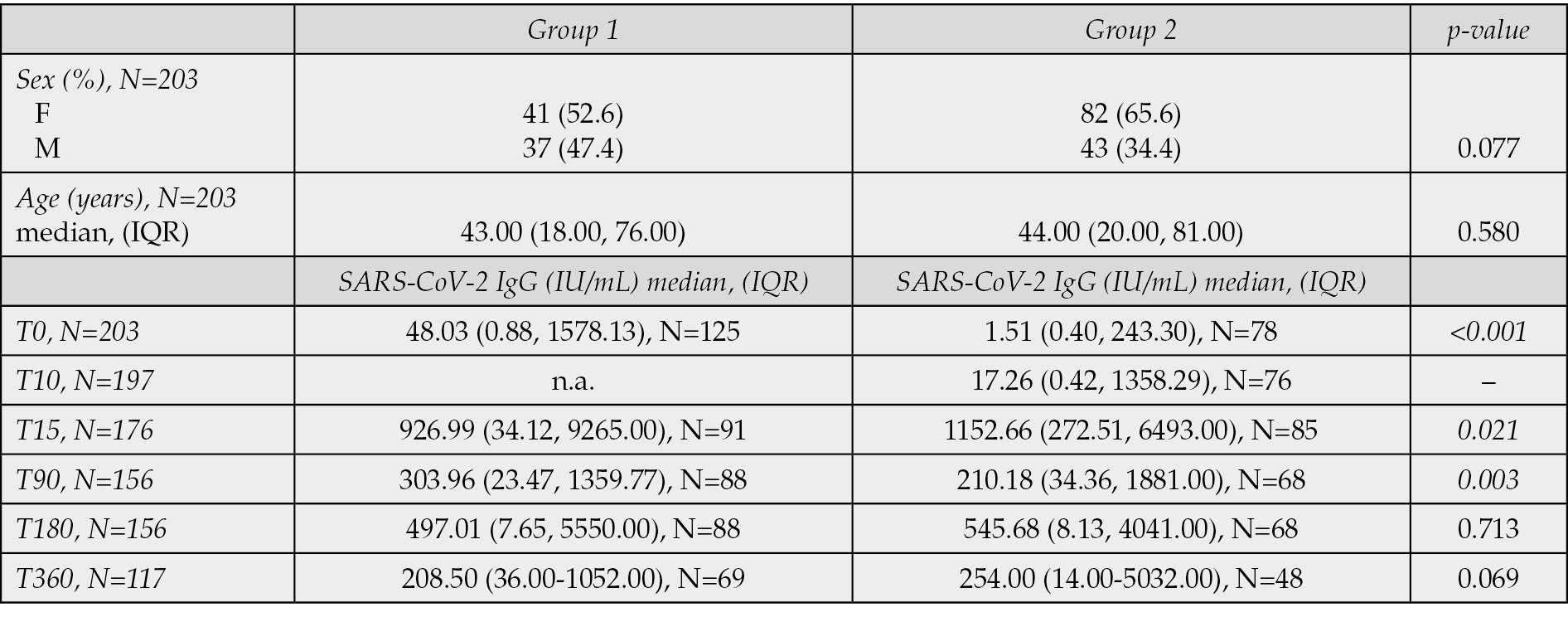
As reported in Table 1, 60.6% of individuals enrolled to our study were women, with a median age of 44 (IQR: 33-56) years and 39.4% were men, with a median age of 43 (IQR 32-53) years. From recorded anamnestic data we found that 39.4% of all individuals were healthy subjects, 39.9% reported mild to medium allergic history and 20.7% other diseases. Only 3% were under immunosoppressive therapy, that could have influenced vaccine response. Moreover 78/203 (38.4%) reported a SARS-CoV-2 infection in the previous six months (52.6% women and 47.4% men) and for this reason they were included in group 1. During the primary vaccination cycle, 192/203 volunteers (94.6%) received BNT162b2 vaccination (69 of them received a single dose and 123 two doses), four subjects (2.0%) received a dose of mRNA-1273 and one (0.5%) a dose of Jcovden, while six individuals (2.9%) left the study after T0, before the vaccine administration. After that, 21 more individuals discontinued the study after T10 and other 20 after T15, because not willing to continue the study, or they did not show up for the subsequent appointments, so that 156 volunteers remained. After 3 months from recruitment, 98/156 subjects (62.8%) received a booster dose of anti-COVID-19 vaccine: 57 of them received BNT162b2 (36.5%) and 41 (26.3%) half a dose of mRNA-1273. The median values and relative IQR of SARS-CoV-2 IgG detected during the follow-up in group 1 and group 2 are showed in Table 2. As expected, the difference of anti-SARS-CoV-2 IgG concentration between the two groups at baseline (T0) was statistically significant (p<0.001), with a median of 1.51 (IQR, 0.40-243.30) IU/mL in subjects without ascertained previous SARS-CoV-2 infection and a median of 48.03 (IQR, 0.88-1,578.13) IU/mL in individuals with previous infection. On the other hand, the anti-SARS-CoV-2 IgG concentration was still significantly higher in group 2 at T15 (p=0.021), while, at T90, the IgG concentration was significantly higher in group 1 (p= 0.003). Conversely, the difference between the two groups was not statistically significant at T180 (p=0.713) and T360 (p=0.069) (Figure 1). As reported in Table 2, at T0 there was not a statistically significant difference between the two groups in terms of sex and age, suggesting that these variables did not affect whether individuals contracted or not SARS-CoV-2 infection before receiving the first cycle of anti-COVID-19 vaccination. Multivariate statistical analysis made considering also the other variables recorded, such as type of vaccine, booster administration and underlying conditions reported in Table 1, showed that at T15 and T90 there were not statistically significant differences between the two groups depending on the type of vaccine administered, with a p-value of 0.379 and 0.091, respectively, probably because 94.6% of the enrolled subjects received the same vaccine (BNT162b2) at the first cycle of vaccination. Similarly, the SARS-CoV-2 IgG median concentrations at T180 and at T360 were not influenced by the type of booster administered, with a p-value of 0.226 and 0.192, respectively, although, among the 98 subjects who received the booster dose, 57 (58.2%) received one dose of BNT162b2 and 41 (41.8%) received half a dose of mRNA-1273. At T90 the median antibody titre dropped in both groups of volunteers, but the IgG decrease in percentage was higher in group 2 (-81.8%) than in group 1 (-67.2%), and the probability of contracting SARS-CoV-2 infection was statistically increased (p <0.001) in subjects who did not receive the booster dose after 90 days from the administration of the first cycle of vaccination. In fact, a total of 59 SARS-CoV-2 infections occurred after vaccination: 3 of them between T15 and T90, 45 between T90 and T180 and 11 between T180 and T360 (Figure 2). Among the 45 individuals who got infected between T90 and T180, 37 belonged to the 58 individuals (63.8%) who did not receive any booster dose, while 8 belonged to those who received: 1 of them received half a dose of mRNA-1273 and 7 received the BNT162b2. Finally, our study showed that 86.3% of individuals who completed the study (101/117) were not infected with SARS-CoV-2 between T180 and T360 and, although the difference in antibody concentration measured at T360 was not statistically significant between group 1 and group 2, the concentration was higher in those who had no COVID-19 disease prior to enrolment and therefore received two doses of vaccine, rather than in those who have had the infection (Figure 1). All individuals reported mild to moderate side effects to vaccination (e.g., asthenia, injection site pain, fever) and mild to moderate COVID-19 illness, not requiring hospitalization, during the follow-up.
Table 1 - Main characteristics of enrolled individuals.
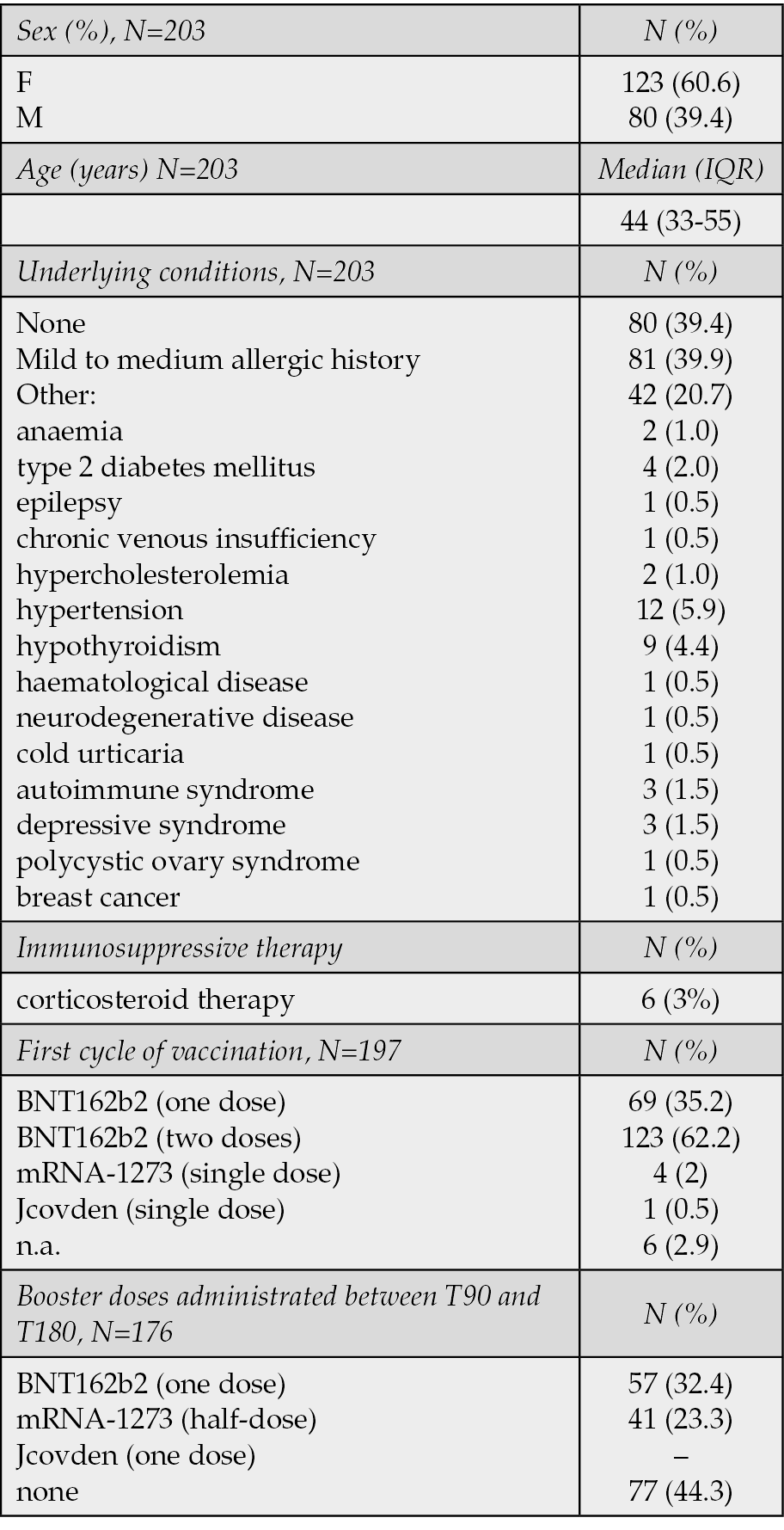
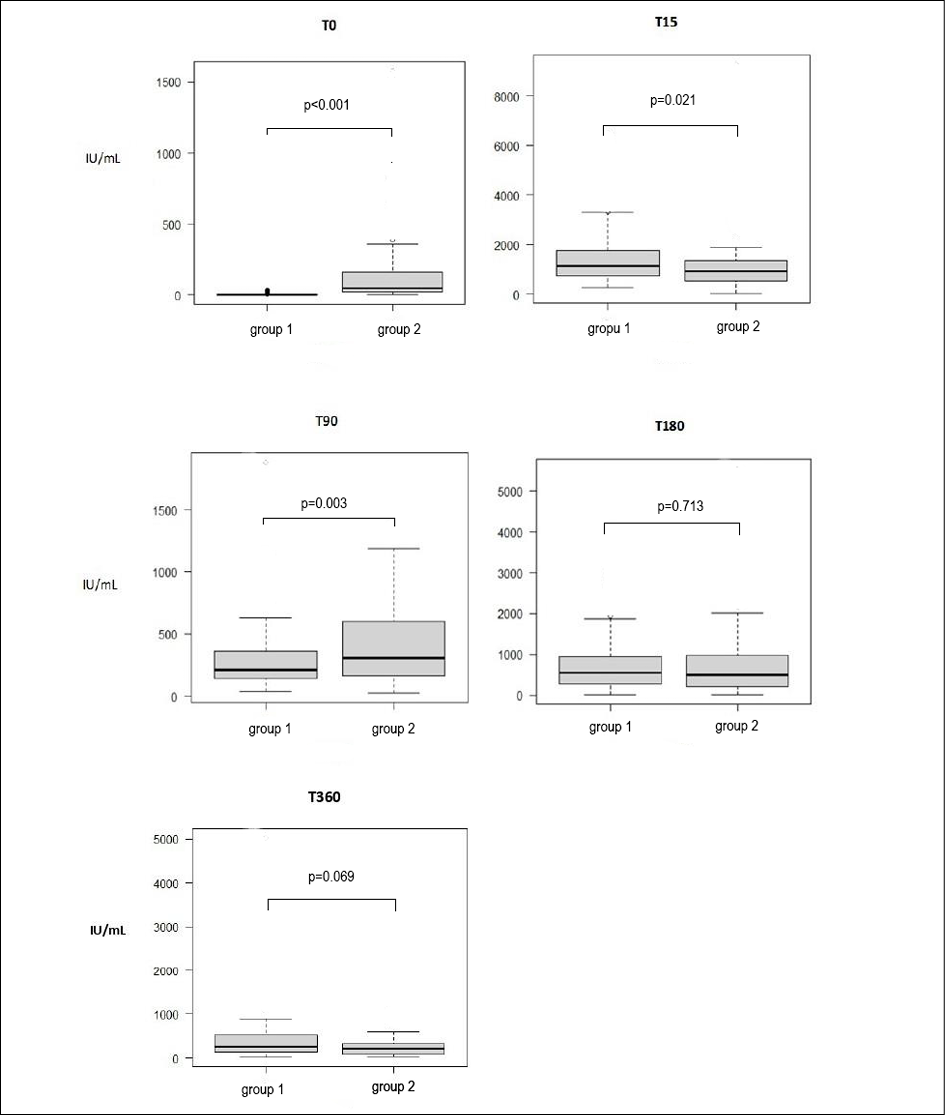
Figure 1 - Comparison of median anti-SARS-CoV-2 IgG concentrations between patients with and without prior SARS-CoV-2 infection at different times of follow-up: T0, T15, T90, T180 and T360. The concentration of anti-SARS-CoV-2 IgG (IU/mL) is indicated on the ordinate axis, distinction between subjects with or without previous SARS-CoV-2 infection at the time of recruitment is indicated on the abscissa axis (group 1= individuals with previous COVID-19 disease, group 2= individuals without previous COVID-19 disease).
Table 2 - The table shows the main characteristics of the two groups of subjects studied (group 1: includes individuals with previous SARS-CoV-2 infection, group 2: includes subjects without previous COVID-19 disease) and the comparison between median values of SARS-CoV-2 IgG, and relative interquartile ranges (IQRs), detected during the follow-up.
DISCUSSION
Although more than three years have passed since the origin of the new coronavirus pandemic, the interest of Public Health in the development and administration of effective anti-COVID-19 vaccines continues, especially because recent evidence suggest that most of them reach efficacy ranging 80 to 100% immediately after administration, and then drastically decrease over the following months [13]. Literature data also report that the basal serum level of anti-SARS-CoV-2 antibodies before vaccination, due for example to an immunological response to SARS-CoV-2 infection, may strongly influence the individual’s immunological response to primary COVID-19 vaccination. Nevertheless, very little is known about the impact of booster dose on serum levels of anti-SARS-CoV-2 antibodies [14]. The main purpose of our study was to compare the immune response over time to COVID-19 vaccination, including the booster, between individuals with previous confirmed COVID-19 disease, that in accordance with the Italian ministerial decree received a single dose of primary vaccination, and individuals without history of SARS-CoV-2 infection, that received two initial doses. Our data confirmed that the basal anti-SARS-CoV-2 IgG value at T0 was significantly associated with having or not had a previous SARS-CoV-2 infection within six months prior to the administration of the first vaccine dose, but it was not significantly associated either with age or sex. Conversely, we found that at T15 the difference of median SARS-CoV-2 IgG concentrations between the two groups was statistically significant in favour of subjects without previous infection (group 2), probably because they received two doses of BNT162b2 or a single dose of mRNA-1273 between T0 and T15, while subjects with a previous infection received a single dose of BNT162b2 or Jcovden vaccine, or half a dose of mRNA-1273. Anyway, at T90, the median concentration was again significantly higher in group 1 than in group 2, while 180 days after the administration of the primary cycle of vaccination the difference between the two groups resulted not statistically significant, independently of any underlying condition and the type of booster dose eventually administered, as well as after one year (T360). Nevertheless, at T360, the median concentration of antibodies was higher in group 2 than in group 1, showing almost a slight inversion of the trend compared to what was seen up to T180, even if the difference was not statistically significant, (Figure 1). In addition, as confirmation to what is reported by the literature data, according to which the probability of contracting the infection after vaccination increases with the passing of months [6, 15-16], our results suggest that the vaccination strategy implemented by the Italian government during the pandemic did not penalize those who, having had a previous SARS-CoV-2 infection, received a single dose of primary vaccination. In fact, among the 59 SARS-CoV-2 infections after vaccination, 5.0% occurred between T15 and T90, 76.4% between T90 and T180, and 18.6% between T180 and T360, with a significantly higher percentage among those individuals belonging in group 2 (OR: 2.55, 95%CI: 1.21-5.35, p=0.012) (Figure 2). Despite the higher level of SARS-CoV-2 IgG and the faster immunological response of the subjects with previous infection, 13/45 individuals (28.9%) who had COVID-19 disease between T90 and T180 belonged to group 1 and were vaccinated with a single dose of BNT162b2 after T0, demonstrating that, in addition to the serum antibodies concentration, the presence of predisposing factors, that may play a role in the probability of contracting the infection, cannot be excluded and this is one of the aspects that should be explored in the future. On the other hand, we found that those individuals who received booster dose, regardless of the type of vaccine, they had a lower frequency of infections (OR: 17.61, 95%CI: 7.21-42.99, p<0.001). Certainly, our data suggest the efficacy of vaccination as a preventive measure against SARS-CoV-2 infections, especially because who was infected after enrolment showed mild to moderate COVID-19 illness, not requiring hospitalization, also aligning with what has been reported by other studies [17-20]. Among them, Lo Sasso et al. [17] evaluated the antibody response after vaccination with BNT162b2 and highlighted how the S-RBD IgG levels were significantly lower in subjects recovered from COVID-19 disease than in vaccinated subjects, moreover he found that anti-S-RBD IgG levels significantly decreased over a short period, and that this decrease was not influenced by age or sex [15]. Salvagno et al. [18] pointed out that, although subjects with the presence of anti-SARS-CoV-2 antibodies at the time of primary vaccination with BNT162b2 had a large increase in the humoral response immediately after administration compared to seronegative subjects, the booster dose did not generate significantly different antibody values between the two groups, confirming the need to administer booster doses even to those individuals who have had a previous SARS-CoV-2 infection. Finally, the study by Padoan et al. [19], conducted on 54 healthcare professionals, 20 of whom with previous COVID-19 disease, underlined how the third booster dose increases the levels of anti-SARS-CoV-2 antibodies, which remain high for a period of 3-4 months and then decrease in a less pronounced way in subjects with previous infection. Potential limitations of our study are that patients who became infected during the study period remain classified in their original groups for antibody evaluation, and that the patient that was vaccinated with a single dose of Jcovden during first cycle of vaccination was categorized into one-dose group even if only one dose of this vaccine was required regardless of previous infection. Moreover, lack of statistical significance at T360 between group 1 and group 2 could be due to the reduced sample size, in fact, many subjects were lost during the follow up and just 117/203 volunteers completed the study. On the other hand, it must be emphasized that this study is one of the few studies that have evaluated antibody responses to anti-COVID-19 vaccination in general population, including individuals not belonging to health professional workers’ class, paying attention on the vaccination strategy undertaken during the pandemic. Our future goal is to continue monitoring the humoral response in our population, to speculate the individual humoral response based on serum antibody levels and personal medical history. This information may be useful to rationalize health and economic resources and guarantee vaccination to those who need it most and when it can reach maximum effectiveness, achieving what could be considered a “personalized” anti-COVID-19 vaccine administration.
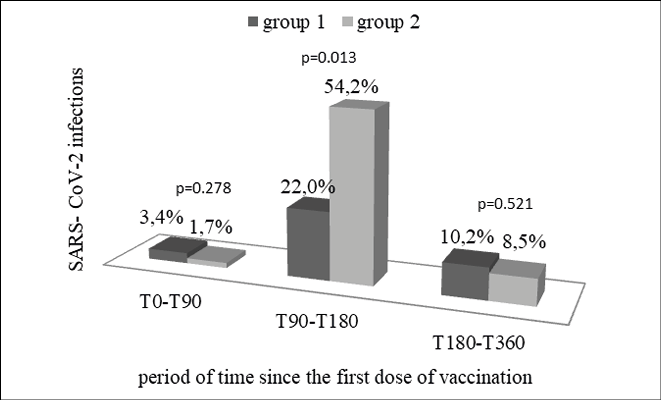
Figure 2 - The figure represents the frequency of SARS-CoV-2 infections that occurred in volunteers belonging to group 1 and group 2 after the first vaccination dose. Frequency is expressed in percentage and time is indicated as periods between follow-up visits: T0-T90, T90-T180 and T180-T360.
Funding
This research did not receive any specific grant from funding agencies in the public, commercial, or not-for-profit sectors.
Conflict of interest
None declared.
REFERENCES
[1] Shaman J, Galanti M. Will SARS-CoV-2 become endemic? Science. 2020; 370: 527-529. doi: 10.1126/science.abe5960.
[2] Rubin EJ, Longo DL. SARS-CoV-2 Vaccination - An ounce (actually, much less) of prevention. N Engl J Med. 2020; 383: 2677-2678. doi: 10.1056/NEJMe2034717.
[3] Polack FP, Thomas SJ, Kitchin N, et al. Safety and efficacy of the BNT162b2 mRNA Covid-19 vaccine. N Engl J Med. 2020; 383: 2603-2615. doi: 10.1056/NEJMoa2034577.
[4] Baden LR, El Sahly HM, Essink B, et al. Efficacy and safety of the mRNA-1273 SARS-CoV-2 vaccine. N Engl J Med. 2020; 384: 403-416. doi: 10.1056/NEJMoa2035389.
[5] Alwan NA, Burgess RA, Ashworth S, et al. Scientific consensus on the COVID-19 pandemic: we need to act now. Lancet. 2020; 396: e71-e72. doi: 10.1016/S0140-6736(20)32153-X.
[6] Dan JM, Mateus J, Kato Y, et al. Immunological Memory to SARS-CoV-2 assessed for up to 8 months after infection. Science. 2021; 371: eabf4063. doi: 10.1126/science.abf4063.
[7] Guo L, Ren L, Yang S, et al. Profiling early humoral response to diagnose novel Coronavirus Disease (COVID-19). Clin Infect Dis. 2020; 71: 778-785. doi: 10.1093/cid/ciaa310.
[8] Tretyn A, Szczepanek J, Skorupa M, et al. Differences in the concentration of anti-SARS-CoV-2 IgG Antibodies Post-COVID-19 recovery or post-vaccination. Cells. 2021; 10: 1952. doi: 10.3390/cells10081952.
[9] Tan W, Lu Y, Zhang J, et al. Viral kinetics and antibody responses in patients with COVID-19. Viral kinetics and antibody responses in patients with COVID-19. medRxiv. (Preprint).
[10] Olliaro P, Torreele E, Vaillant M. COVID-19 vaccine efficacy and effectiveness - the elephant (not) in the room. Lancet Microbe. 2021; 2: e279-e280. doi: 10.1016/S2666-5247(21)00069-0.
[11] Dolgin E. Is one vaccine dose enough if you’ve had COVID? What the science says. Nature. 2021; 595(7866): 161-162. doi: org/10.1038/d41586-021-01609-4.
[12] Ministry of Healty (Italy). Circular 32884-21/07/2021 DGPRE DGPRE-P “Update on quarantine and surveillance measures for close (high-risk) contacts of SARS-CoV-2 infection cases”.
[13] European Medicines Agency. Coronavirus disease (COVID-19) Retrieved at https://www.ema.europa.eu/en/human-regulatory/overview/public-health-threats/coronavirus-disease-covid-19. Last access August 9, 2022.
[14] Notarte KI, Ver AT, Velasco JV, et al. Effects of age, sex, serostatus, and underlying comorbidities on humoral response post-SARS-CoV-2 Pfizer-BioNtech mRNA vaccination: a systematic review. Crit Rev Clin Lab Sci. 2022; 28: 1-18. doi: 10.1080/10408363.2022.2038539.
[15] Khoury DS, Cromer D, Reynaldi A, et al. Neutralizing antibody levels are highly predictive of immune protection from symptomatic SARS-CoV-2 infection. Nat Med. 2021; 27: 1205-1211. doi: 10.1038/s41591-021-01377-8.
[16] Chemaitelly H, Tang P, Hasan MR, et al. Waning of BNT162b2 Vaccine Protection against SARS-CoV-2 Infection in Qatar. N Engl J Med. 2021; 385: e83.NEJMoa2114114. doi: 10.1056/NEJMoa2114114.
[17] Lo Sasso B, Giglio RV, Vidali M, et al. Evaluation of Anti-SARS-Cov-2 S-RBD IgG Antibodies after COVID-19 mRNA BNT162b2 Vaccine. Diagnostics 2021; 11: 1135. doi: 10.3390/diagnostics11071135.
[18] Salvagno GL, Henry BM, Pighi L, De Nitto S, Gianfilippi G, Lippi G. Humoral respone post-BNT162b2 single booster in pre-vaccination baseline SARS-CoV-2 seronegative and seropositive subjects. Bioch Clin. 2022. doi: 10.19186/BC_2022.019.
[19] Padoan A, Cosma C, Della Rocca F, et al. A cohort analysis of SARS-CoV-2 anti-spike protein receptor binding protein (RDB) IgG levels and neutralizing antibodies in fully vaccinated healthcare workers. Clin Chem Lab Med. 2022; 60: 1110-1115. doi: 10.1515/cclm-2022-0322.
[20] Levi R, Azzolini E, Pozzi C, et al. One dose of SARS-CoV-2 vaccine exponentially increases antibodies in individuals who have recovered from symptomatic COVID-19. J Clin Invest. 2021; 131: e149154. doi: 10.1172/JCI149154.