Le Infezioni in Medicina, n. 3, 394-398, 2023
doi: 10.53854/liim-3103-13
CASE REPORTS
Vertebral osteomyelitis due to Lactobacillus paracasei in a diabetic patient. A case report and literature review
Giuliana Carrega1, Barbara Ricciardi1, Valentina Bartolacci1, Sabrina Brenci2, Manuela Izzo1, Patrizia Morelli2, Stefania Tigano1, Giovanni Riccio1
1Infectious Diseases Unit, “Santa Maria di Misericordia” Hospital, Albenga (SV), Italy;
2Microbiology Unit, “Santa Corona” Hospital, Pietra Ligure (SV), Italy
Article received 14 May 2023, accepted 25 July 2023
Corresponding author
Giuliana Carrega
E-mail: g.carrega@asl2.liguria.it
SummaRY
Staphylococci are the most frequent cause of vertebral osteomyelitis, but infections due to unusual pathogens are also reported. We describe a rare case of spondylodiscitis due to Lactobacillus paracasei. A 74-year-old diabetic male was evaluated for fever and back pain. Blood cultures and vertebral biopsy were positive for Lactobacillus paracasei. He often took laxatives and probiotics for chronic constipation. After target treatment the patient improved but he died for a heart attack two months after the end of the treatment. Although Lactobacillus paracasei is usually not pathogenic, sepsis is described in immunocompromised patients while vertebral osteomyelitis is rare.
Keywords: Lactobacillus, vertebral osteomyelitis, sepsis, probiotics.
INTRODUCTION
Vertebral osteomyelitis, also called spondylodiscitis, is a challenge for physicians [1]. An insidious onset with progressive worsening is usually described. A late diagnosis can have serious consequences in particular neurological damage [2,3]. Vertebral osteomyelitis are grouped into brucellar, tuberculous or pyogenic. The most frequent etiology is Staphylococcus aureus but infections due to Gram-negatives and other Gram positive microorganisms are also reported [4]. Infections due to unusual pathogen are rare [5].
We describe a case of vertebral osteomyelitis due to Lactobacillus paracasei in a diabetic patient.
CASE REPORT
A 74-year-old man was admitted in our center because of fever and back pain. He had type II diabetes and ischemic heart disease. He was not a smoker. He often took laxatives and probiotics for chronic constipation. Other chronic treatments were low-dose salicylate and metformin. One month before, he was admitted in the emergency department for intestinal sub-occlusion. At admission in our center, he was febrile, with severe backache. Blood investigations showed mild anemia, while white cell count and platelets were in the normal range. Erythrocyte sedimentation rate was 91 mm/1st h, C-reactive protein was 33 mg/dl (normal range <5 mg/dl). He had mild renal insufficiency (creatinine 1,43 mg/dl clearance 46 ml/min), glycemia 71 mg/dl, glycosylated hemoglobin 7.1%. Neoplastic markers and HIV test were negatives. Magnetic resonance imaging (MRI) showed an alteration of the signal affecting the intervertebral disc and the somatic cancellous bone of L1 and L2. Extensive erosions of the opposing somatic plates, more evident on L1, were associated. After administration of contrast medium, peripheral somatic bone and disc impregnation was observed around a central component with a necrotic-colliquative appearance. There were signs of inflammation of the anterolateral paravertebral tissues, with possible initial involvement of the left psoas muscle, and the neural foramina (Figure 1). No sign of endocarditis was observed on trans-thoracic echocardiography. Abdominal computed tomography scan (CT) and colonoscopy were negative. Six blood cultures and a CT-guided needle biopsy on L2 were performed (Figure 2). Histological examination revealed inflammation without neoplastic cells. Blood cultures and biopsy specimen yielded a strain of Lactobacillus paracasei (identified using Matrix Assisted Laser Desorption Ionization – Time of Fligh -MALDI-TOF- M, Becton Dikinson, USA). The patient was initially treated with ampicillin (3 gr i.v. q 6 h) and levofloxacin (750 mg po q 24 h). Antimicrobial susceptibility of the isolates was determined by Kirby Bauer method and showed sensitivity to clindamycin, levofloxacin, tetracyclines, and resistance to ampicillin. Treatment was switched to clindamycin (600 mg IV q 8 h). Meanwhile ESBL positive E. coli was isolated from urine culture and a 10 days course of imipenem/cilastatin (500 mg IV q6 h) was associated.
Clinical symptoms evolved favorably with defervescence and progressive reduction of backache. C-reactive protein progressively decreased to normal range.
During hospitalization, the patient had a heart attack and cardiac arrest, which he survived.
Antibiotic therapy was discontinued after 6 weeks. One month after the end of treatment, MRI showed reduced but still present the uptake in the L1-L2 vertebral bodies and minimum signal in left psoas muscle. A PET/CT showed minimal F-FDG uptake in L1-L2 level. C-reactive protein was in the normal range.
We decided to monitor clinical and laboratory test without other antibiotic treatment. Two months after stopping treatment, patient died for another fatal heart attack.
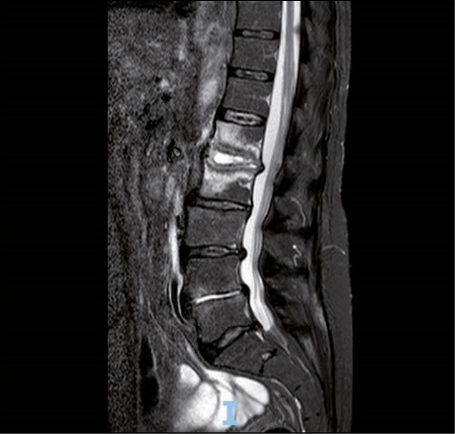
Figure 1 - Magnetic resonance image of the spine showing high signal intensity on L1 and L2 vertebrae and paravertebral tissue.
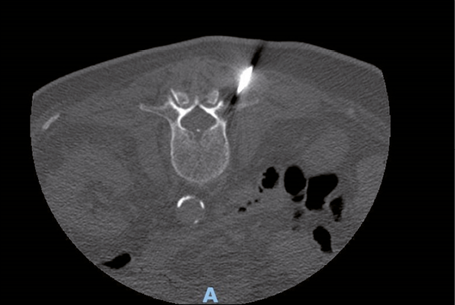
Figure 2 - CT-guided needle vertebral biopsy.
DISCUSSION
The Lactobacillus spp. are Gram-positive, non-spore forming rods or cocco-bacilli widely distributed in the environment and humans. They colonize the oral cavity, the gastrointestinal and genital tract and are present in many foods and para pharmaceutical products, including over-the-counter probiotics. Even if their real utility is questionable, these compounds are often prescribed in patients with type 2 diabetes because of reported positive impact on the metabolic control [6, 7]. Lactobacillus spp. is considered not pathogenic but sepsis, with or without organ involvement, have been recently and widely reviewed [8-10]. The most severe cases are described in patients with severe underlying conditions and in preterm infant [8-13]. Spondylodiscitis is a rare localization and a challenging diagnosis [4, 5]. Symptoms and imaging allow for clinical suspicion, but microbiological diagnosis is essential for an effective therapy and successful case management. In our case we had 6 positive blood cultures, but in presence of unusual pathogens the Infectious Diseases Society of America Guideline recommends vertebral biopsy [1]. A CT-scan guided vertebral biopsy was performed and resulted positive for the same pathogen confirming Lactobacillus-bacteremia as responsible for bone vertebral infection.
Lactobacillus spp and Bifidobacterium spp are the bacteria most frequently present in probiotics. We performed a MEDLINE search using as keywords Lactobacillus, Bifidobacterium, probiotics, bacteremia (last search July 7th 2023). Table 1 summarizes cases of probiotic-associated bacteremias included in the reviews and in the MEDLINE search [8-23].
Table 1 - Case reports and literature reviews of bacteremias associated with probiotics (some cases were reported simultaneously in different reviews).
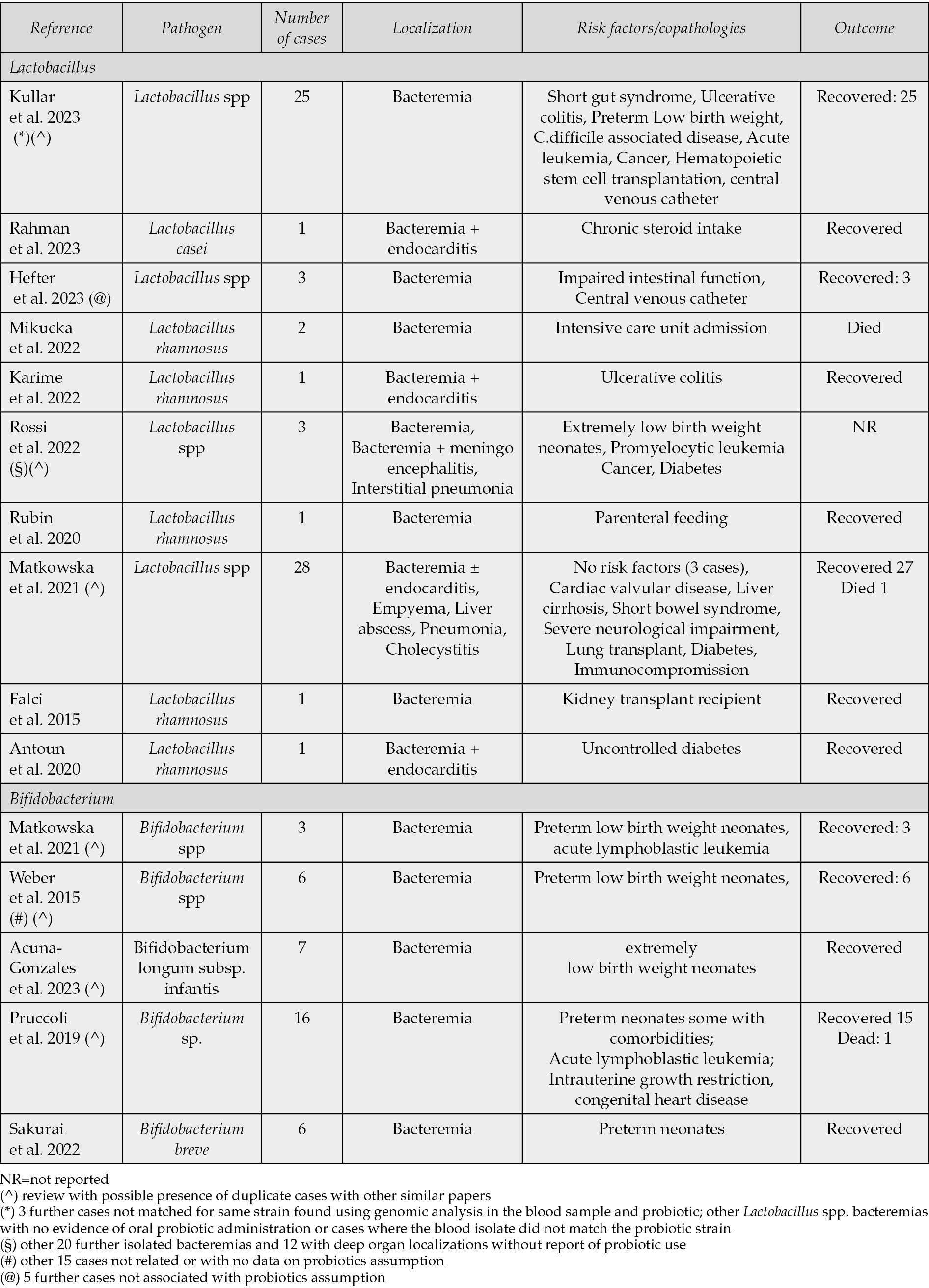
Noteworthy, 5 cases of Lactobacillus rhamnosus bacteremia, with associated endocarditis in 2, were reported in patients with diabetes and taking probiotics [8, 14]. Three further cases of Lactobacillus spp bacteremia, apparently not associated with probiotics, were described in diabetic patients (in one case diabetes was diagnosed at time of Lactobacillus infection) [8, 22, 23]. Two cases of discitis/osteomyelitis, one due to Lactobacillus sp and the other to Lactobacillus casei/paracasei have been described in an intravenous drug abuser and in a patient affected with stroke, diabetes, hypertension, hip prothesis, cardiac pacemaker and umbilical hernia [5, 23]. Both cases, apparently not related with probiotics assumption, were diagnosed in absence of positive blood cultures.
Lactobacillus antimicrobial susceptibilities are poorly defined [25-27]. Different methods are recommended by Clinical Laboratory Standards Institute (CLSI) while the European Committee on Antimicrobial Susceptibility Testing (EUCAST) did not indicate any antibiotic susceptibility threshold for this pathogen [28]. According to the disk diffusion method, our isolate resulted in vitro resistant to ampicillin and susceptible to clindamycin, levofloxacin and tetracyclines. The patient improved with targeted antibiotic therapy. Unfortunately, the follow up was short due to unexpected death not related to the infection.
Our case focuses on the difficulties in diagnosing spondylodiscitis by unusual pathogens that require an aggressive, multidisciplinary approach. A possible role of Lactobacillus in the development of invasive infections should be considered in patients who regularly take probiotics [29]. The benefits of using probiotics should be weighed against the potential risks, especially in the most fragile patients.
Conflicts of interest
The authors declare that they have no conflicts of interest regarding the publication of this paper.
Funding
None to declare
REFERENCES
- Berbari EF, Kanj SS, Kowalski TJ, et al. 2015 Infectious Diseases Society of America (IDSA) Clinical Practice Guidelines for the Diagnosis and Treatment of Native Vertebral Osteomyelitis in Adults. Clin Infect Dis. 2015; 61 (6), e26-e46. doi: 10.1093/cid/civ482.
- Gentile L, Benazzo F, De Rosa F, et al. A systematic review: characteristics, complications and treatment of spondylodiscitis. Eur Rev Med Pharmacol Sci. 2019; 23 (2 Suppl.), 117-128. doi: 10.26355/eurrev_201904_17481.
- Rutges JP, Kempen DH, van Dijk M, Oner FC. Outcome of conservative and surgical treatment of pyogenic spondylodiscitis: a systematic literature review. Eur Spine J. 2016; 25 (4), 983-999. doi: 10.1007/s00586-015-4318-y.
- Herren C, Young N, Pishnamaz M et al. Spondylodiscitis: diagnosis and treatment options. A systematic review. Dtsch Arztebl Int. 2017; 114 (51-52), 875-882. doi: 10.3238/arztebl.2017.0875
- Obeidat Y, Suliman M S, Mullins M, Saunders E. Lactobacillus Discitis/Osteomyelitis in an intravenous drug abuser. Cureus. 2020; 12 (7), e9219. doi: 10.7759/cureus.9219.
- Food and Agriculture Organization of the United Nations (FAO); World Health Organization (WHO). Report of a joint FAO/WHO expert consultation on the evaluation of health and nutritional properties of probiotics in food including powder milk with live lactic acid bacteria, 2001. http://www.fao.org/3/a-a0512e.pdf (Last accessed Jul 05, 2022).
- Kocsis T, Molnár B, Németh D, et al. Probiotics have beneficial metabolic effects in patients with type 2 diabetes mellitus: a meta-analysis of randomized clinical trials. Scient Rep. 2020; 10, 11787. doi: 10.1038/s41598-020-68440-1.
- Matkowska M, Garbacz K, Kusiak A. Probiotics: should all patients take them? Microorganisms. 2021; 9, 2620. doi: 10.3390/microorganisms9122620
- Kullar R, Goldstein EJC, Johnson S, McFarland LV. Lactobacillus bacteremia and probiotics: a review. Microorganisms. 2023; 11 (4), 896. doi: 10.3390/microorganisms11040896
- Rossi F, Amadoro C, Gasperi M, et al. Lactobacillii infection case reports in the last three years and safety implications. Nutrients 2022; 14, 1178. doi: 10.3390/nu14061178
- Pruccoli G, Silvestro E, Pace Napoleone C, et al. Are probiotics safe? Bifidobacterium bacteremia in a child with severe heart failure. Infez Med. 2019; 27 (2), 175-178.
- Weber E, Reynaud Q, Suy F, et al. Bifidobacterium species bacteremia: risk factors in adults and infants. Clin Infect Dis. 2015; 61 (3), 482- 484. doi: 1048.1093/cid/civ347
- Acuna-Gonzalez A, Kujawska M, Youssif M, et al. Bifidobacterium bacteraemia is rare with routine probiotics use in preterm infants: A further case report with literature review. Anaerobe. 2023; 80, 102713. doi: 10.1016/j.anaerobe.2023.102713
- Antoun M, Hattab Y, Akhrass F, Hamilton L D. Uncommon pathogen, Lactobacillus, causing infective endocarditis: case report and review. Case Rep Infect Dis 2020; 2020, 8833948, doi: 10.1155/2020/8833948.
- Falci DR, Rigatto MH, Cantarelli VV, et al. Lactobacillus rhamnosus bacteremia in a kidney transplant recipient. Transpl Infect Dis. 2015; 17 (4), 610-612. doi:10.1111/tid.12410.
- Rubin IMC, Stevnsborg L, Mollerup S, et al. Bacteraemia caused by Lactobacillus rhamnosus given as a probiotic in a patient with a central venous catheter: a WGS case report. Infect Prev Pract. 2022; 4 (1), 100200. doi: 10.1016/j.infpip.2022.100200
- Karime C, Barrios MS, Wiest NE, et al. Lactobacillus rhamnosus sepsis, endocarditis and septic emboli in a patient with ulcerative colitis taking probiotics. BMJ Case Rep. 2022; 15 (6), e249020. doi: 10.1136/bcr-2022-249020.
- Mikucka A, Deptuła A, Bogiel Tet al. Bacteraemia caused by probiotic strains of Lacticaseibacillus rhamnosus-case studies highlighting the need for careful thought before using microbes for health benefits. Pathogens. 2022; 11 (9), 977. doi: 10.3390/pathogens11090977.
- Hefter Y, Powell L, Tabulov CE, et al. An 11-year review of lactobacillus bacteremia at a pediatric tertiary care center. Hosp Pediatr. 2023: e2022006892. di: 10.1542/hpeds.2022-006892.
- Rahman A, Alqaisi S, Nath J. A Case of Lactobacillus casei endocarditis associated with probiotic intake in an immunocompromised patient. Cureus. 2023; 15 (4), e38049. doi: 10.7759/cureus.38049
- Sakurai Y, Watanabe T, Miura Y, Uchida T, Suda N, Yoshida M, Nawa T. Clinical and bacteriologic characteristics of six cases of Bifidobacterium breve bacteremia due to probiotic administration in the neonatal intensive care unit. Pediatr Infect Dis J. 2022; 41 (1), 62-65.
- Lnu K, Abdesalam A, Bambach W. Lactobacillus bacteremia: a tell-tale sign for diabetes? J Community Hosp Med Perspect. 2022; 12, 86-88.
- Ramos-Coria D, Canto-Losa J, Carrillo-Vazquez et al. Lactobacillus gasseri liver abscesses and bacteremia: a case report. BMC Infect Dis. 2021; 21, 518.
- Pailhoriès H, Sanderink D, Abgueguen P, Lemarié C. A neglected pathogen responsible for deep infections: a case report of spondylodiscitis due to Lactobacillus sp. C. Médecine Mal Infect. 2017; 47, 302-303.
- Goldstein EJ, Tyrrell KL, Citron DM. Lactobacillus species: taxonomic complexity and controversial susceptibilities. Clin Infect Dis. 2015; 60 (Suppl. 2), S98-S107. doi: 10.1093/cid/civ072.
- Lee M R, Tsai C J, Liang SK et al. Clinical characteristics of bacteraemia caused by Lactobacillus spp. and antimicrobial susceptibilities of the isolates at a medical centre in Taiwan, 2000.2014. International journal of antimicrobial agents. 2015; 46, 439-445.
- Anisimova EA, Yarullina DR . Antibiotic resistance of lactobacillus strains. Curr Microbiol. 2019; 76 (12), 1407-1416. doi: 10.1007/s00284-019-01769-7
- European Committee on Antimicrobial Susceptibility Testing. http://www.eucast.org – last access July 7 2023.
- Doron S, Snydman DR. Risk and safety of probiotics. Clin Infect Dis. 2015; 60 (Suppl. 2), S129-S134. doi:10.1093/cid/civ085.